
Developing innovative technologies and techniques has significantly improved patient outcomes in spine surgery. These innovations, whether in surgical approaches, training, care efficiencies, or new monitoring methods, contribute to process enhancement and the introduction of novel devices. The transformation of spinal disease management is at a promising start, marked by the integrating of digital solutions into standard medical practices. Spinal care is progressing through emerging technology, enabling healthcare providers to surpass regulatory constraints, expand data networks, offer digital platforms, and enhance care delivery models.
Spinal care is poised for significant transformation, driven by AI, ML, and other technological solutions. These headways are set to revolutionize how spinal conditions are diagnosed, treated, and managed, amplifying precision, efficiency, and patient outcomes. A PubMed-published study points to an imminent growth phase in spinal care where healthcare providers harness data analytics within expanding electronic health record repositories. This will optimize patient-provider interactions, fostering integrated hybrid service lines through expanded digital and telemedicine platforms. Patient and provider decision aids through data modeling and the deployment of performance metrics are projected to enhance care quality. Solutions like spinal navigation, robotic surgery, patient-specific implants, and 3D printing are anticipated to witness robust patent growth. Amidst these transformative changes, the future of spinal care is poised to offer better solutions to those seeking effective interventions for spinal conditions.
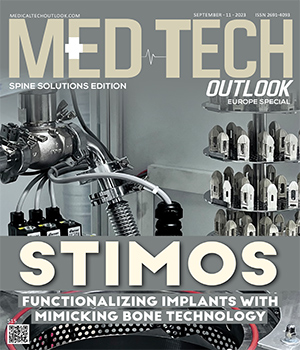
This edition of MedTech Outlook Europe highlights the key innovations in the spine solutions space and how firms leverage the latest technology solutions to offer top-notch services. It features thought leadership articles from Leo Hovestadt, Director of Quality Assurance at Elekta, and Michael Geraci, Medical Director of the Comprehensive Spine Program at Catholic Health.
Leo Hovestadt shed light on the challenges and opportunities in AI adoption facilitated by the European Union AI Act and good machine learning practices in the US, Canada, and the UK. Michael Geraci emphasizes the significance of training for spine care providers to improve treatment outcomes, suggesting changes in patient referrals and better training for primary care physicians and specialists to enhance spine care delivery.
This edition also features stimOS, a private research company and certified legal manufacturer that develops implant material technologies and procedures, offering product development and certification services for spinal fusion surgery implants.
In this edition featuring the Top Spine Solutions Providers in Europe in 2023, we hope you find the appropriate company suited to your business requirements.